Hello Folks,
Let’s start with a little farm history. Steve’s parents bought this abandoned farm in the mid-1970s.
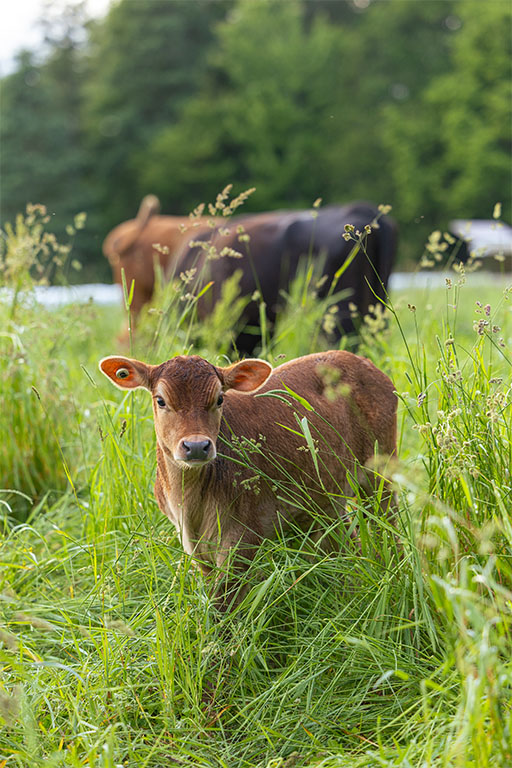
At first they raised beef, but eventually purchased their first Jersey milk cows. The farm had been a dairy throughout the 1900s and given the land base — rocky and very shallow soil — turning grass into milk via grazing made sense. Fortunately there were also some less rocky fields used to produce hay for the long dark winters.
Steve landed back on the farm in the mid-90s. Believe it or not, the details of what it means to be a certified organic dairy farm were still being hammered out. First he transitioned the land to organic and then the cows. This was long before long before words like “regenerative” or “GMO-free,” or “all-natural” became common in the marketplace.
We’ve maintained continual organic certification since the mid-90s. When we sold the milking herd four years ago and pivoted to beef, we chose to remain certified organic. WHY?
- It holds us accountable to our land: we don’t use synthetic fertilizers or sludge, we nurture biodiversity and soil health through a diverse landscape; we don’t use any pernicious bioaccumulating chemicals.
- It holds us accountable to our animals: we don’t use antibiotics; we must feed certified organic grain; a certain percentage of the herd’s annual diet must come from grazing.
- It holds us accountable to our customers: we undergo an extensive yearly audit from the Maine Organic Farmers & Gardeners Association certification arm. During this 1/2 day inspection, we must furnish records and other evidence that shows we are farming in the way that we claim. The proof is in the pudding as they say.
It’s not just us; all organic farmers are held to similar standards whether big or small. Don’t get me wrong, there’s been some loopholes, notably in organic dairy, but overall I very much believe in the integrity of organic farmers. It appears customers feel the same way: In 2025, the Organic Trade Association reported sales of organic products at $76.6 billion, with a growth rate double that of the overall marketplace.
I recently attended an online meeting and chatted with an organic farmer from western Kansas growing grains that end up in products like Clif Bars. There are even family farms in the U.S. behind big brands.
Whether it’s a grain farm in Kansas or a small beef operation in Maine, the commitment behind the organic label is the same. Thanks for being part of that story.
Sonja and Steve